
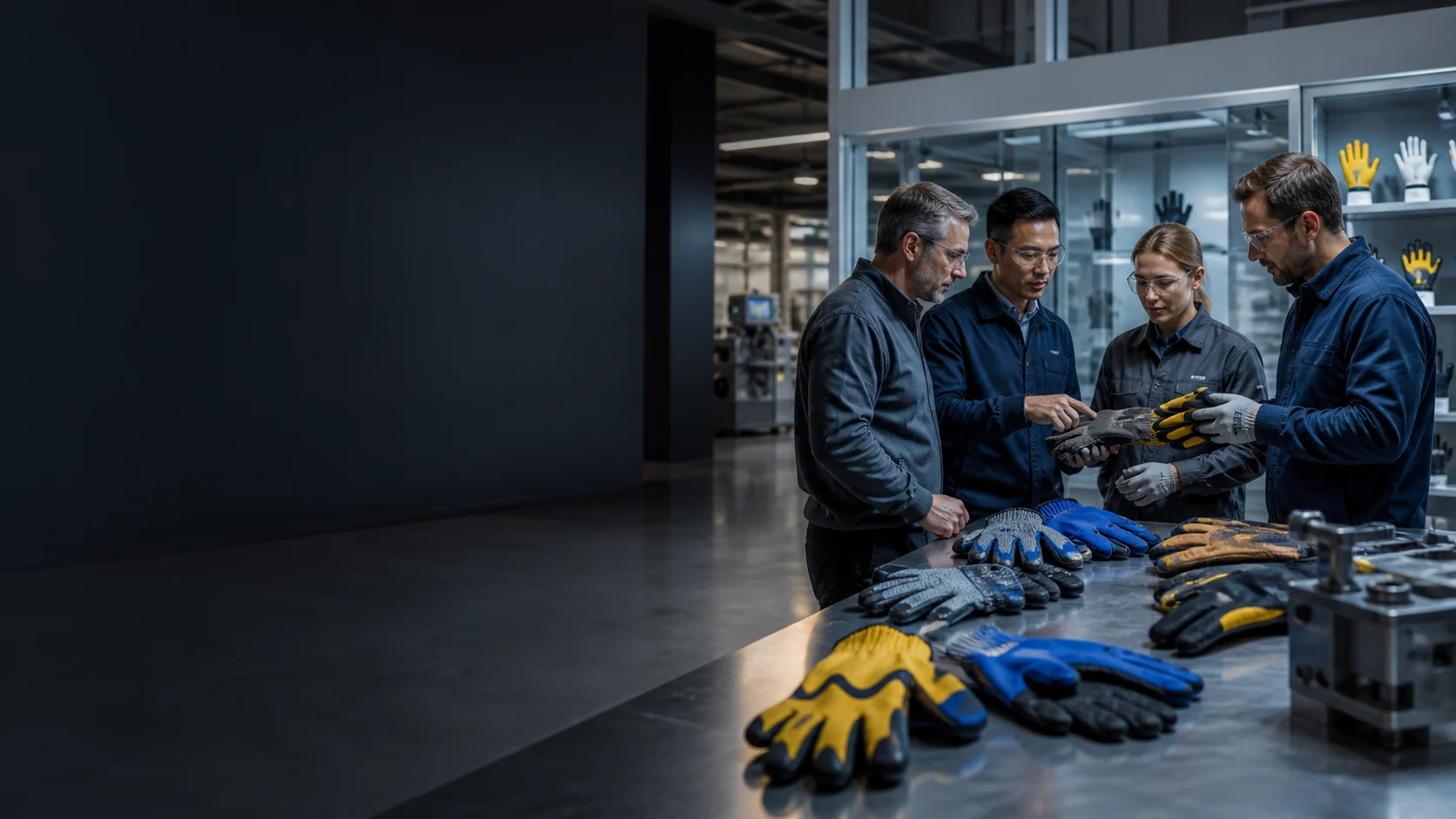
1.What Are Cut-Resistant Gloves?
Cut-resistant gloves are personal protective equipment (PPE) designed to help protect workers’ hands from cuts and lacerations when handling sharp materials, tools, and components. They are widely used in metal fabrication, glass manufacturing, automotive production, construction, and other industrial environments.
Unlike ordinary work gloves, cut-resistant gloves are made with specially engineered fibers to provide different levels of protection while maintaining comfort and flexibility.

2.What Materials Are Used in Cut-Resistant Gloves?
One commonly used combination is HPPE (High-Performance Polyethylene) and fiberglass.
HPPE fibers offer high strength, lightweight construction, and good flexibility. Fiberglass is often incorporated into the yarn structure to enhance cut resistance.
By combining these materials, manufacturers can develop protective glove liners suitable for different industrial applications.
Some gloves also feature nitrile coatings on the palm and fingers. Nitrile coating provides grip, abrasion resistance, and durability, making these gloves suitable for handling tools, metal parts, and components in industrial environments.
3.Types of Nitrile Coating for Cut-Resistant Gloves
Nitrile coating is widely used in cut-resistant gloves to improve grip, abrasion resistance, and overall handling performance. Different coating textures offer different advantages depending on the working environment.
- Smooth Nitrile Coating
Smooth nitrile features a flat and even surface. It provides good abrasion resistance and is suitable for general industrial handling, assembly, and material processing.

- Foam Nitrile Coating
Foam nitrile has a porous surface structure that offers a comfortable grip and flexibility. It is commonly used in automotive assembly, warehousing, and general handling applications.

- Sandy Nitrile Coating
Sandy nitrile features a rough, textured surface designed to provide enhanced grip, particularly when handling oily or slippery components. It is suitable for metal fabrication, mechanical maintenance, and demanding industrial tasks.
The right nitrile coating should be selected according to the working environment, surface conditions, and required grip performance. When combined with HPPE and fiberglass liners, nitrile coatings can provide a practical solution for various industrial hand protection needs.

4.How Are Cut-Resistant Gloves Manufactured?
At Minghao Gloves, our manufacturing process integrates several key production stages:
- Yarn Twisting: Protective fibers, including HPPE and fiberglass, are processed into specialized yarns.
- Seamless Knitting: Computerized glove knitting machines produce seamless liners in different gauges, including 7G, 10G, 13G, 15G, 18G, and 21G.
- Palm Coating: Nitrile coatings can be applied to the palm and fingers to improve grip and wear resistance.
- Quality Inspection: Finished gloves are inspected to ensure product consistency and meet specified quality requirements.
Our integrated manufacturing capabilities allow us to develop different glove structures and specifications for various customer requirements.
Where Are Cut-Resistant Gloves Used?
Cut-resistant gloves are widely used in industries where workers handle sharp materials, tools, or components. Different working environments require different levels of cut protection, grip, and flexibility.
- Metal Fabrication and Manufacturing
Workers handling sheet metal, steel components, sharp metal edges, and cutting tools face a high risk of hand injuries. Cut-resistant gloves help reduce the risk of cuts during metal processing, assembly, and material handling.
- Glass Manufacturing and Handling
Glass sheets, panels, and finished glass products often have sharp edges. Cut-resistant gloves provide additional hand protection during glass processing, transportation, and installation.
- Automotive Industry
In automotive manufacturing, workers frequently handle stamped metal parts, mechanical components, and sharp-edged materials. Cut-resistant gloves help protect hands while maintaining the flexibility required for assembly work.
- Construction and Building
Construction workers handle metal profiles, glass, tiles, tools, and other potentially sharp materials. Suitable cut-resistant gloves help reduce the risk of cuts during installation and material handling.
- Warehousing and Industrial Handling
Workers handling machinery accessories, metal components, and industrial materials may encounter sharp edges. Nitrile-coated cut-resistant gloves can provide a combination of grip, abrasion resistance, and hand protection.
The right glove should always be selected according to the specific workplace hazards, required protection level, and working conditions.
5.How to Choose the Right Cut-Resistant Gloves?
When selecting gloves, consider the required cut protection level, material composition, coating type, grip, flexibility, and working environment.
Standards such as EN 388 and ANSI/ISEA 105 help buyers evaluate mechanical protection performance. Always check the test results of the finished glove before selecting a suitable model.
Looking for a Cut-Resistant Glove Manufacturer?
Minghao Gloves specializes in manufacturing seamless protective gloves with different fiber combinations, knitting gauges, and coating options.
Contact us to discuss your application requirements and explore customized cut-resistant glove solutions.
